UV Light Reveals Possible Camouflage on 125-Million-Year-Old Crocodile Fossil
A remarkably preserved fossil from northeastern Spain offers a rare glimpse into the skin, soft tissues, and potential coloration of an ancient crocodile relative that lived approximately 125 million years ago.
This new research, detailed in the Zoological Journal of the Linnean Society, provides the first in-depth description of soft tissues found in Montsecosuchus depereti. This Lower Cretaceous crocodylomorph was discovered at the Pedrera de Meià site in Lleida, Catalonia, Spain. By examining the fossil under ultraviolet (UV) light, researchers identified new evidence concerning its skin, sensory structures, respiratory anatomy, and possible color pattern. The Institut Català de Paleontologia Miquel Crusafont led the study.
A Small Crocodile Preserved for 125 Million Years
About 125 million years ago, a small crocodile perished in a karstic lake near the coast of what is now the Catalan Pre-Pyrenees. Its body settled into fine lake sediments, where exceptionally favorable conditions led to its detailed preservation. These sediments eventually formed the lithographic limestones of Pedrera de Meià, now part of the UNESCO Orígens Global Geopark.
The fossil, cataloged as MGB-512 and measuring around 50 centimeters, is housed at the Museum of Natural Sciences of Barcelona. Though discovered over a century ago and studied in the 1990s, scientists have now extracted previously hidden information, including the shape and distribution of its preserved soft tissues.
The key to this discovery came when paleontologists Oscar Castillo and Jesús Serrano were compiling a database of fossils from the Montsec lithographic limestones in Catalan and European museums. Examining the holotype of Montsecosuchus depereti under UV light, they observed structures appearing to be soft tissue remnants.
UV light can reveal otherwise invisible structures by causing fossilized tissues and surrounding rock to react differently.
'UV light allows us to see details that would otherwise remain completely hidden in the rock,' explains Oscar Castillo-Visa, the study's lead author.
Ancient Skin Revealed Under UV Light
This technique allowed the team to document various soft tissues, including epidermal scales. While Montsecosuchus depereti has been known to science since the early 20th century, this analysis offers the first detailed view of its skin.
The scales varied significantly in shape and size across the body. The researchers also noted the absence of the high caudal fin seen in modern crocodiles.
Evidence of sensory organs in the skin may also be preserved. These potential structures appear within some scales, particularly around the neck, limbs, and along the sides of the trunk and tail.
In living crocodiles, similar sensory organs detect touch, water pressure changes, and respond to temperature and chemical signals. In Montsecosuchus, these possible sensory structures are located only in small scales along the body's edges. This distribution might suggest these organs first evolved in localized areas before becoming more widespread in later crocodylomorph lineages.
Clues to an Advanced Respiratory System
The UV analysis also revealed cartilaginous structures in the chest, indicating that Montsecosuchus already possessed an efficient respiratory system similar in some ways to modern crocodiles.
This finding suggests sophisticated thoracic anatomy evolved surprisingly early in crocodylomorph history.
'These traits indicate that, despite being a primitive animal, it was already very well adapted to a semi-aquatic lifestyle,' Castillo-Visa concludes.
A Possible 125-Million-Year-Old Color Pattern
Perhaps the most striking discovery relates to the animal's tail.
Under UV light, some scales in the caudal region exhibit alternating light and dark bands across the tail. Researchers interpret these bands as potential evidence of the animal's original coloration.
This pattern may have served as disruptive camouflage, breaking up the crocodile's outline and making it harder to spot. If confirmed, Montsecosuchus would represent the oldest known crocodylomorph with preserved evidence of coloration.
Scientists have not yet identified the exact colors that formed the pattern.
'At the moment we cannot say for sure what color the crocodile's tail was, but it would be expected that it was not so different from current species, which also show different coloration patterns,' explains Albert G. Sellés, a co-author of the article.
The findings offer new insights into the early evolution of crocodylomorph skin, respiration, and external anatomy. They also underscore the scientific significance of Catalonia's fossil record for reconstructing vertebrate evolutionary history.
Researchers Oscar Castillo-Visa, Albert G. Sellés, Àngel Galobart (Institut Català de Paleontologia Miquel Crusafont and director of the Conca-Dellà Museum), and Phil Bell from the University of New England contributed to this research.
La Pedrera de Meià, an Exceptional Fossil Site
Pedrera de Meià is classified as a Konservat-Lagerstätte, a term for fossil sites with extraordinary preservation. These sites can preserve not only bones and hard tissues but also delicate soft structures typically lost during fossilization.
This exceptional preservation has made Pedrera de Meià a key location for studying Lower Cretaceous fish, amphibians, reptiles, and plants. Over 8,000 fossil specimens have been recovered there to date.
Fossils from the site are displayed at the Montsec de Meià Interpretation Center in Vilanova de Meià, featuring over 100 exceptionally preserved specimens. The Orígens Geopark also hosts a website showcasing many of the site's most representative fossils.
The fossil record includes spiders, flies, wasps, beetles, insect larvae, crustaceans, vertebrates like fish and amphibians, and a notable diversity of plants. Among these is Montsechia, recognized as the world's first known angiosperm. The center also participates in the 'Dinosaurs of the Pyrenees' project, connecting museums and interpretation centers that highlight the rich paleontological record of the Catalan Pyrenees.
Fresh materials — Science news
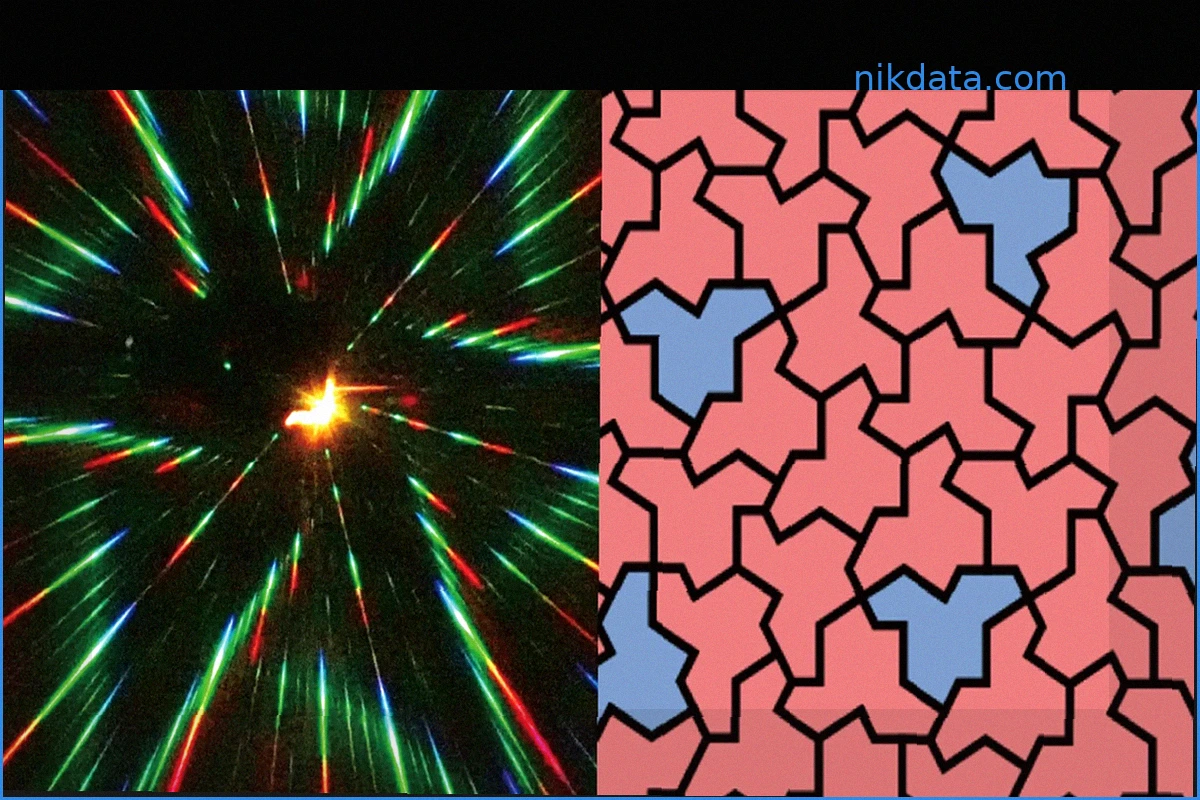
The Einstein Problem's Shape Reveals New Physics Through Light Patterns
A mathematical shape, famous for solving a decades-old puzzle, is now showing an unexpected link to physics. Structures based on this shape can make light form unusual chiral patterns, opening new avenues for studying how geometry affects optical behavior. Researchers from the Institute of

Screen Time's Unexpected Link to Kids' Cognitive Skills
A Finnish study has uncovered an unexpected correlation between screen usage and cognitive capabilities. Children who spent more time in front of screens as they grew tended to exhibit enhanced cognitive processing during their adolescent years. One of the lead researchers advises agai
Tiny Fossils Reveal Secrets of Complex Life's Origin
While the hunt for life on Mars or distant icy moons often grabs headlines, a profound mystery about the emergence of complex life is unfolding much closer to home. Scientists are diligently working to pinpoint when the first eukaryotes appeared on Earth and how these pivotal organisms paved

Einstein's Cosmic Blunder: The Cosmological Constant and Dark Energy
More than a century ago, Albert Einstein shifted his focus from gravity to the universe's destiny. In 1917, shortly after formulating his general theory of relativity, he began applying its equations to cosmology, seeking to understand the universe on its grandest scales. Gravity was the natura

The Bacteria that Make Cheese Taste So Good May Also Benefit Your Gut
Scientists have identified the bacteria responsible for the unique flavors of three British artisan cheeses. Intriguingly, some of these microbes might also offer advantages for human health. Researchers at the University of Reading's Food Microbial Sciences Unit meticulously tracked the mi

Low-Fat Vegan Diet Helps People Lose Weight Without Eating Less
A low-fat vegan diet can significantly reduce the energy density of consumed foods by approximately 30%, enabling individuals to eat fewer calories while still feeling satisfied. This dietary approach was also linked to weight loss, even without participants being instructed to restrict thei