Potatoes May Have Given Indigenous Andeans a Digestive Superpower
For millennia, potatoes have been a cornerstone of life in the Andes. Indigenous Andean communities were the first to cultivate this starch-rich crop, making it a dietary staple long before its global spread. Now, researchers suggest that this historical dependence on potatoes might have also influenced human evolution.
Modern Indigenous people in Peru possess a greater number of copies of a gene crucial for starch digestion compared to any other known population. A recent study, jointly led by researchers from UCLA and the University at Buffalo, indicates that natural selection began to favor Indigenous Andeans with a high number of copies of the salivary amylase gene, known as AMY1, around the same time potatoes became established in the Andean highlands, approximately 6,000 to 10,000 years ago.
The findings were recently published in the journal Nature Communications.
A Genetic Advantage for Digesting Starch
Individuals with more copies of AMY1 generally produce higher levels of the amylase enzyme in their saliva and are believed to metabolize starch more efficiently, according to Abigail Bigham, an associate professor of anthropology at UCLA specializing in populations in the Peruvian Andes and the Himalayas of Nepal.
For this study, Bigham and her team of evolutionary anthropologists gathered DNA samples from Quechua speakers in the Peruvian Andes. These samples were then compared with genomic databases containing thousands of DNA samples from various present-day human populations.
'The high-altitude Andes are recognized as a key region for understanding human evolutionary adaptation, such as adaptation to hypoxia, where tissues receive insufficient oxygen,' Bigham stated. Her earlier work with co-author Kelsey Jorgensen, then a postdoctoral scholar, provided evidence of selection in the starch digestion pathway of Andean people. 'This new research underscores the value of the Andes in comprehending human evolutionary adaptation to other selective environmental pressures, including diet.'
Co-corresponding author Omer Gokcumen, a professor of biological sciences at the University of Buffalo, previously established that the initial duplication of AMY1 occurred in humans at least 800,000 years ago. He noted that the current findings offer exceptionally strong evidence of natural selection acting on this gene in the Andes after the commencement of potato cultivation.
'Biologists have long hypothesized that different human groups have developed genetic adaptations in response to their diets,' he remarked, 'but there are very few instances with such robust evidence.'
How Potato Farming Shaped Andean Evolution
The ancestors of Indigenous Andeans already had varying numbers of AMY1 copies before they settled in the highlands and began domesticating potatoes. Some individuals had relatively few copies, while others possessed many.
However, once potatoes became a significant food source, individuals with a higher number of AMY1 copies appear to have gained an evolutionary advantage.
The researchers estimated that, starting around 10,000 years ago, individuals with approximately 10 or more copies experienced a 1.24% survival or reproductive advantage per generation.
'Evolution is a sculpting process, not a construction project,' Gokcumen explained. 'It's not as if Indigenous Andeans acquired additional AMY1 copies the moment they started eating potatoes. Rather, over time, those with fewer copies were naturally selected out of the population, perhaps due to having fewer offspring, while those with more copies persisted.'
Over numerous generations, this process led to a significant distinction. Indigenous people residing in Peru today possess an average of 10 AMY1 copies, which is approximately two to four more copies than any of the other 83 populations examined in the study.
A Potato Farming Signature in Human DNA
The researchers also compared Indigenous Peruvians with the Maya, an Indigenous population in Mexico sharing an evolutionary history with Andean peoples but lacking a tradition of potato farming.
On average, Indigenous Peruvians carried 10 copies of AMY1, compared to six among the Maya.
This difference supported the theory that potato cultivation played a crucial role, but the researchers needed to account for another significant event in Indigenous American history.
Following European contact in the 15th century, Indigenous populations across the Americas experienced a drastic decline due to disease, famine, violence, conflict, and a rapid loss of genetic diversity.
Therefore, the researchers had to determine whether this severe population bottleneck could have reduced the number of individuals carrying fewer AMY1 copies, creating the appearance of natural selection even if potato consumption was not the cause.
Differentiating between these possibilities presented one of the study's primary challenges.
Employing cutting-edge ultra-long DNA sequencing technologies alongside newly accessible comparative datasets, the team discovered that a high number of AMY1 copies had already become more prevalent in the Andes several thousand years before the arrival of Europeans.
This timing supports the conclusion that genetic selection related to diet, rather than the subsequent population collapse, was responsible for the genetic pattern observed today.
What Ancient Potatoes Reveal About Human Adaptation
Bigham suggested that these findings could spur broader research into human populations inhabiting high altitudes, where individuals face challenges beyond low oxygen. Daily life there can also involve limited food resources, along with intense exposure to cold temperatures and ultraviolet radiation.
The research also raises a broader question about how humans might continue to adapt to modern diets. Today, foods and cuisines from across the globe are more accessible than ever, yet genetic adaptation remains an integral part of the human story.
'There are theories, such as the paleo diet, which is based on the Paleolithic environment and suggests we are not suited for post-domestication foods,' she commented. 'However, I believe this research demonstrates that human populations have responded and evolved to changing food conditions within the last 10,000 years. Our metabolic pathways are not solely a relic of that Paleolithic past.'
Fresh materials — Science news

GLP-1 Medications in Children Linked to Nutritional Deficiencies
Children prescribed GLP-1 medications for weight loss, prediabetes, or type 2 diabetes may face a significant nutritional risk. A study published in Childhood Obesity identified that almost 17% of young patients (16.8%) were diagnosed with a nutritional deficiency within their first year of tr

Dietary Changes May Reverse Biological Age in Older Adults Within 4 Weeks
Significant shifts in biological age markers are achievable for older adults in a remarkably short period, driven solely by dietary modifications. New findings from the University of Sydney indicate that Australians aged 65 to 75 who reduced either dietary fat or animal-based protein displayed
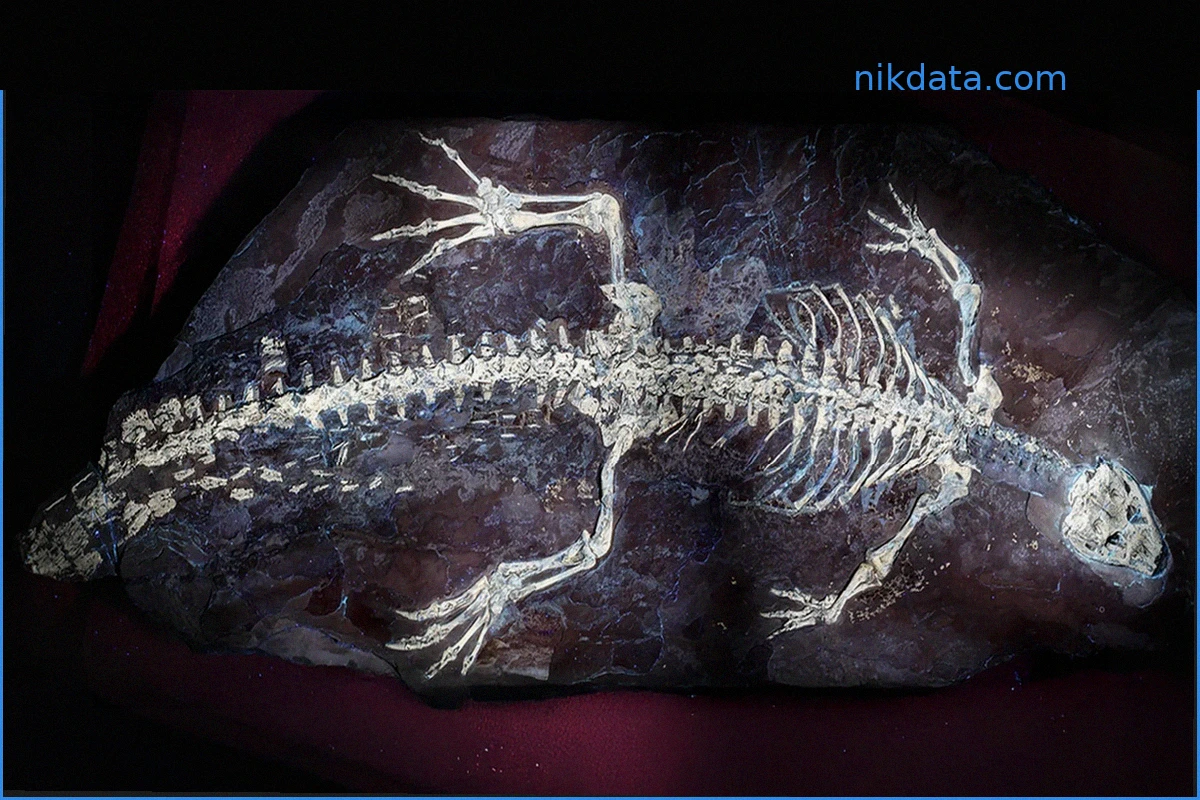
UV Light Reveals Possible Camouflage on 125-Million-Year-Old Crocodile Fossil
A remarkably preserved fossil from northeastern Spain offers a rare glimpse into the skin, soft tissues, and potential coloration of an ancient crocodile relative that lived approximately 125 million years ago. This new research, detailed in the Zoological Journal of the Linnean Society,
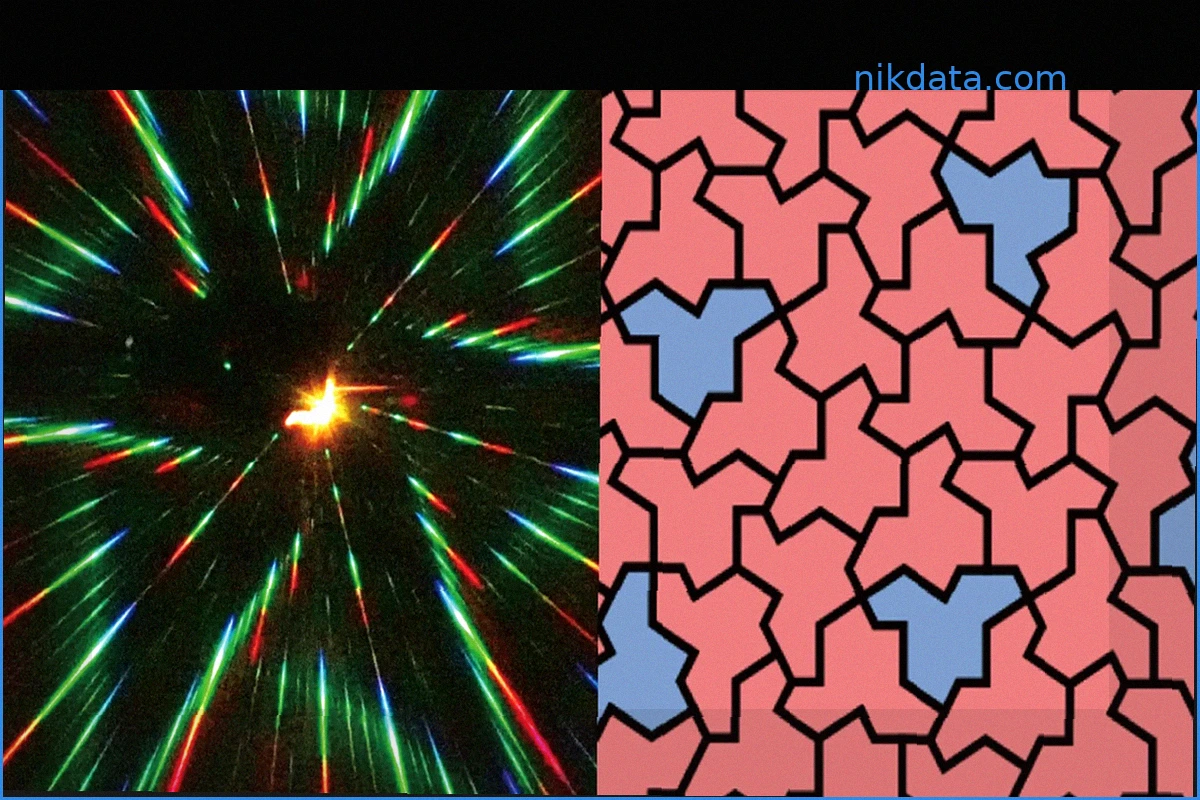
The Einstein Problem's Shape Reveals New Physics Through Light Patterns
A mathematical shape, famous for solving a decades-old puzzle, is now showing an unexpected link to physics. Structures based on this shape can make light form unusual chiral patterns, opening new avenues for studying how geometry affects optical behavior. Researchers from the Institute of

Screen Time's Unexpected Link to Kids' Cognitive Skills
A Finnish study has uncovered an unexpected correlation between screen usage and cognitive capabilities. Children who spent more time in front of screens as they grew tended to exhibit enhanced cognitive processing during their adolescent years. One of the lead researchers advises agai
Tiny Fossils Reveal Secrets of Complex Life's Origin
While the hunt for life on Mars or distant icy moons often grabs headlines, a profound mystery about the emergence of complex life is unfolding much closer to home. Scientists are diligently working to pinpoint when the first eukaryotes appeared on Earth and how these pivotal organisms paved